
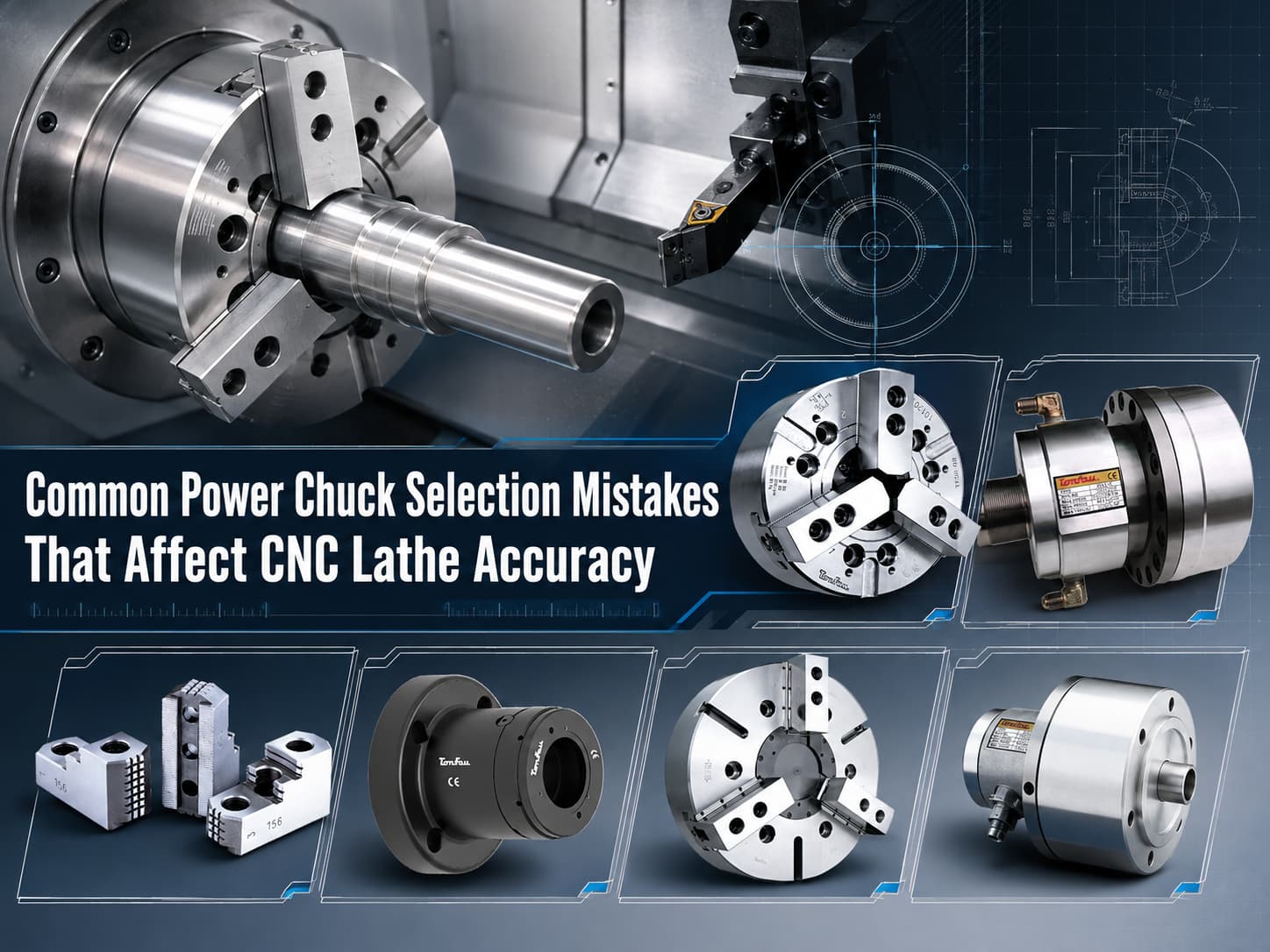
If a CNC turning process still shows runout, vibration, unstable dimensions, or surface marks after checking the machine, cutting tools, and machining parameters, the problem may not be the chuck body itself. In many cases, the jaw setup is one of the hidden causes.
Lathe chuck jaws are the direct contact point between the chuck and the workpiece. If the jaws do not match the workpiece shape, machining stage, clamping force, or required tolerance, even a suitable power chuck may fail to deliver stable results.
For B2B manufacturers producing shafts, tubes, flanges, bushings, connectors, gear blanks, hydraulic components, or precision metal parts, jaw selection is not just a small tooling detail. It affects part quality, production repeatability, inspection results, and long-term machining efficiency.
Quick Takeaway
Choosing lathe chuck jaws should not be based only on habit, price, or availability. The right jaw setup depends on the workpiece condition and the machining result you need to protect.
| Production Situation | Better Jaw Direction | Why It Matters |
|---|---|---|
| Raw material gripping or first operation | Hard jaws | Supports stronger gripping and repeated rough machining |
| Finished surfaces or second operation | Soft jaws | Helps reduce clamping marks and improve positioning |
| Thin-wall tubes or sleeves | Machined soft jaws | Distributes clamping pressure and reduces deformation risk |
| Irregular workpieces | Custom-machined soft jaws | Improves contact area and workpiece support |
| Heavy-duty cutting | Hard jaws or properly supported soft jaws | Prevents unstable gripping under higher cutting loads |
| High-accuracy parts | Soft jaws with correct machining | Helps improve concentricity and repeatability |
In simple terms, use hard jaws when gripping strength and durability are the priority. Use soft jaws when accuracy, surface protection, and workpiece support are more important.
Quick Diagnosis: Is Your Jaw Setup Causing the Problem?
Before replacing the chuck or changing machining parameters, manufacturers should first check whether the jaw setup is contributing to the issue. This is especially important for factories using CNC turning lathes for repeated production, where small clamping problems can quickly become repeated quality issues.
| Problem Seen on the Shop Floor | Possible Jaw-Related Cause | What to Check First |
|---|---|---|
| Runout after clamping | Jaw contact is not concentric or jaws are worn | Jaw condition, contact area, and machining accuracy |
| Vibration during cutting | Workpiece is not supported evenly | Jaw contact length and clamping position |
| Surface marks on finished parts | Jaw type is too aggressive for the surface | Whether soft jaws are needed |
| Thin-wall part deformation | Clamping force is too concentrated | Soft jaw profile and clamping pressure |
| Batch-to-batch variation | Jaw setup is inconsistent or not repeatable | Jaw wear, serration fit, and chuck compatibility |
| Longer setup time | Soft jaws are not prepared in advance | Spare jaw planning and machining workflow |
These issues are costly because they are often discovered after machining or inspection. A better jaw decision at the setup stage can reduce rework, scrap, and production delays.
Choose by Machining Stage, Not by Habit
A common mistake is using the same jaw type for every job. In reality, roughing and finishing usually have different clamping requirements.
During rough machining, the workpiece surface may still be removed later, so gripping strength and durability are often more important. During finishing or second-operation machining, the workpiece may already have a finished surface or near-final dimensions, so accuracy and surface protection become more important.
| Machining Stage | Main Risk | Recommended Direction |
|---|---|---|
| First operation / roughing | Workpiece movement under cutting load | Use hard jaws when strong gripping is required |
| Second operation | Repositioning error or surface damage | Use soft jaws machined to match the part |
| Fine finishing | Clamping marks or runout | Use soft jaws with better contact support |
| Heavy cutting | Jaw wear or unstable gripping | Use hard jaws or confirm enough jaw support |
| Precision batch production | Repeatability variation | Standardize jaw setup and replacement timing |
For many CNC turning processes, the best approach is not choosing only one jaw type. A common strategy is to use hard jaws for the first operation and soft jaws for finishing or second-operation clamping.
When Hard Jaws Are the Better Choice
Hard jaws are suitable when the production requirement is strength, durability, and repeated gripping. TON FOU’s HJ Series Standard Hard Jaws are made of heat-treated hardened steel and are suitable for raw material gripping, standardized parts production, and heavy-duty cutting.
For buyers, the most important point is that hard jaws are not intended for custom-profile machining. Since they cannot be re-machined, they are better suited for standard workpieces, rough machining, and applications where the workpiece surface will be machined again later.
| HJ Series Buyer Focus | Why It Matters |
|---|---|
| Heat-treated hardened steel | Supports wear resistance and repeated clamping in production environments |
| Cannot be re-machined | Better for standard gripping, not custom-profile clamping |
| Raw material gripping | Suitable for first-operation machining before the final surface is produced |
| Standardized parts production | Helps support repeatable clamping for mass production |
| Heavy-duty cutting | Provides stronger gripping support under higher machining loads |
| Serration specification | Buyers should confirm compatibility with the chuck before ordering |
Hard jaws are usually a practical choice when the part is still in the rough stage, the material is strong enough to tolerate gripping pressure, and the process requires reliable holding under heavier cutting loads.
When Soft Jaws Are the Better Choice
Soft jaws are suitable when the priority is accuracy, surface protection, and better contact support. TON FOU’s HC Series Standard Soft Jaws are non-heat-treated consumable jaws that can be machined to match the workpiece shape and improve clamping precision.
For B2B manufacturers, this matters because many turning problems are not caused by insufficient clamping force, but by poor force distribution. If the jaw contact area is too small, the workpiece may deform, vibrate, or shift during machining.
| HC Series Buyer Focus | Why It Matters |
|---|---|
| Machinable jaw body | Allows the jaw profile to match the workpiece for better support |
| Consumable part | Should be included in spare parts and replacement planning |
| Improved clamping precision | Helps finishing, second-operation machining, and low-runout requirements |
| Suitable for irregular workpieces | Useful when standard jaws cannot provide stable contact |
| Fine finishing applications | Helps reduce clamping marks and deformation on finished parts |
| High-accuracy manufacturing | Supports repeatability and dimensional consistency |
Soft jaws are especially useful for finished parts, thin-wall components, irregular shapes, and high-accuracy parts. However, they should be managed as consumables. If a production line uses soft jaws frequently, buyers should plan spare parts and replacement timing in advance.
Common Mistakes That Cause Runout, Deformation, and Surface Marks
Most jaw-related problems come from using the wrong jaw type for the workpiece condition or ignoring compatibility details during purchasing.
| Common Mistake | Possible Result | Better Approach |
|---|---|---|
| Using hard jaws on finished surfaces | Surface marks or cosmetic defects | Use soft jaws when surface protection matters |
| Using soft jaws without proper machining | Poor contact and unstable clamping | Machine the jaw profile to match the workpiece |
| Ignoring jaw contact area | Vibration, deformation, or runout | Increase contact support with suitable soft jaws |
| Applying too much clamping force | Thin-wall part deformation | Adjust pressure and improve jaw support |
| Reusing worn jaws too long | Poor repeatability and dimensional variation | Inspect jaws and replace them when needed |
| Choosing jaws separately from the chuck | Installation or gripping problems | Match jaws with the chuck model and serration |
| Forgetting soft jaws are consumables | Production delay when jaws are unavailable | Include soft jaws in spare parts planning |
These mistakes may look small, but in mass production they can create repeated quality issues. For factories that need stable delivery and consistent inspection results, jaw setup should be treated as part of process control.
What B2B Buyers Should Confirm Before Ordering Jaws
For purchasing teams, ordering chuck jaws is not just about choosing hard jaws or soft jaws. The wrong specification can cause installation issues, unstable gripping, or delayed production.
Before ordering, buyers should confirm these points with the supplier or internal engineering team:
| Purchasing Checkpoint | Why It Matters |
|---|---|
| Chuck model compatibility | Ensures the jaws can be installed correctly |
| Jaw size | Must match the chuck and workpiece requirement |
| Serration specification | Prevents mismatch between jaw and chuck |
| Machining stage | Determines whether hard jaws or soft jaws are suitable |
| Workpiece surface condition | Finished surfaces may require soft jaws |
| Workpiece wall thickness | Thin-wall parts may deform under concentrated force |
| Required tolerance | Higher accuracy may require machined soft jaws |
| Production volume | Affects durability, replacement planning, and spare parts stock |
| Clamping force requirement | Helps avoid slipping or deformation |
For B2B buyers, the key question is not simply “which jaw is cheaper?” but “which jaw setup reduces production risk and supports stable machining?”
Jaw Selection Should Match the Complete Workholding System
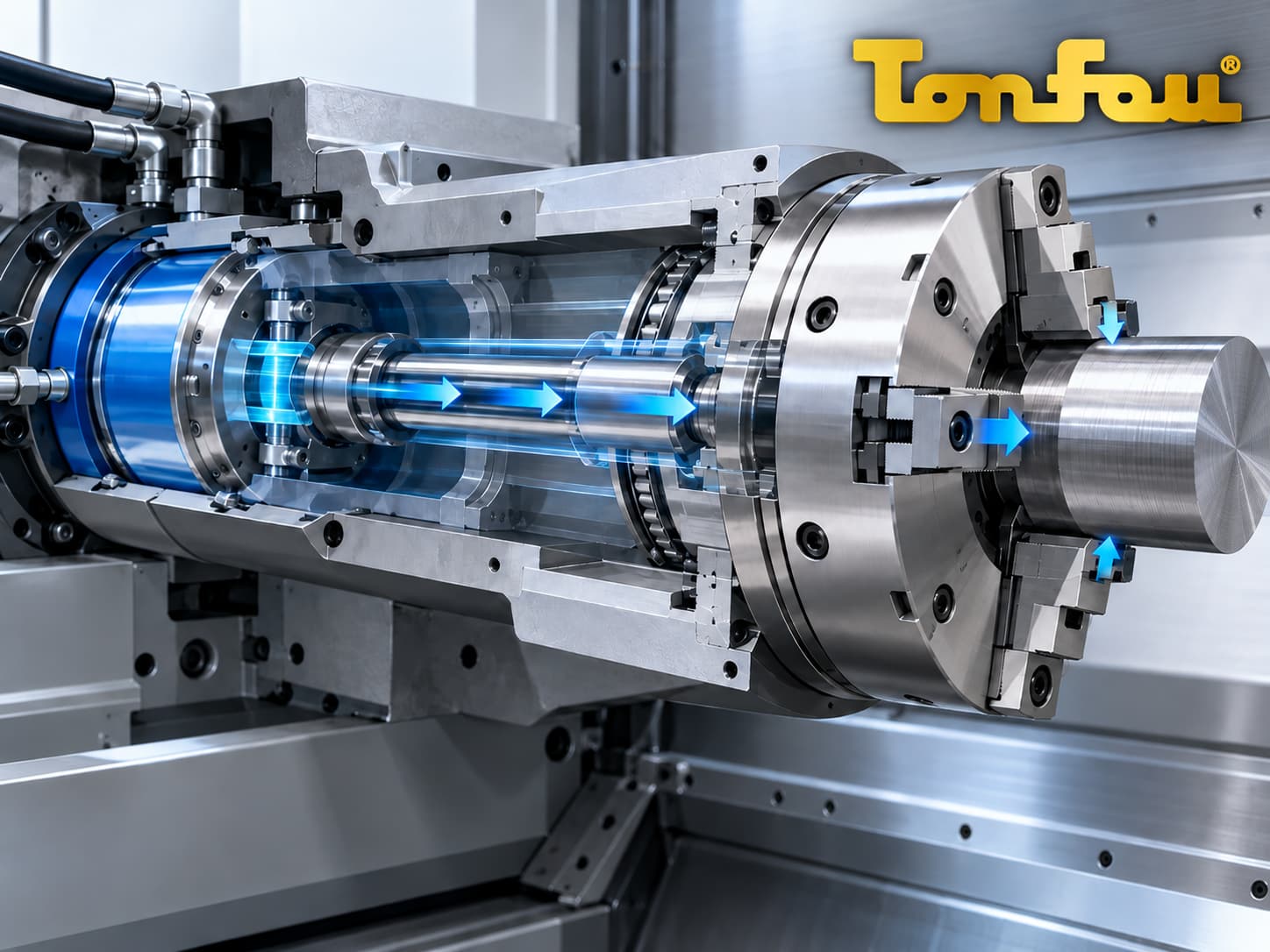
Lathe chuck jaws do not work alone. They are part of a complete system that includes the power chuck, hydraulic cylinder, drawtube, spindle, and machining process.
For example, a through hole power chuck may be selected for bar feeding and continuous CNC turning. In that case, the jaws must support repeated gripping and release during production. A non through hole power chuck may be selected for short or special-shaped workpieces, where jaw contact area and clamping stability become more important.
The hydraulic system also affects jaw performance. If clamping force is too high, thin-wall or precision parts may deform. If the force is too low, the workpiece may move during machining. For bar feeding applications, a through hole hydraulic cylinder may be used with a through hole chuck; for compact setups without bar feeding, a non through-hole hydraulic cylinder may be more suitable.
| System Item | What Buyers Should Check |
|---|---|
| Power chuck | Chuck type, gripping capacity, workpiece fit |
| Hydraulic cylinder | Stroke, pull force, speed, and chuck compatibility |
| Jaws | Hard jaw or soft jaw, size, serration, contact area |
| Workpiece | Shape, material, surface condition, wall thickness |
| Machining process | Roughing, finishing, second operation, or mass production |
| Production plan | Replacement needs, spare parts, and long-term use |
When these factors are reviewed together, manufacturers can reduce clamping problems and improve machining consistency.
TON FOU Jaw Options for CNC Lathe Workholding
TON FOU provides both HJ Series Standard Hard Jaws and HC Series Standard Soft Jaws for CNC lathe and power chuck applications. These two jaw types support different machining stages, from raw material gripping to precision finishing.
| TON FOU Jaw Series | Best Fit | Purchasing Focus |
|---|---|---|
| HJ Series Standard Hard Jaw | Raw materials, standard parts, rough machining, heavy-duty cutting | Choose when durability and gripping strength are more important than custom machining flexibility |
| HC Series Standard Soft Jaw | Irregular parts, finished surfaces, precision clamping, fine finishing | Choose when the jaw needs to be machined to match the workpiece and improve clamping precision |
For B2B buyers, the key is not only choosing hard jaws or soft jaws. The more important step is confirming whether the jaw specification matches the chuck, workpiece, machining stage, and accuracy requirement. Buyers can also review TON FOU’s full workholding product lineup when planning chuck, jaw, and hydraulic cylinder combinations.
Conclusion
Jaw selection has a direct impact on CNC turning stability, especially when the process involves finished surfaces, thin-wall workpieces, irregular shapes, or tight tolerance requirements. If a production line is facing runout, deformation, surface marks, vibration, or inconsistent batch quality, the jaw setup should be one of the first areas to review.
Hard jaws are better suited for raw material gripping, standardized production, rough machining, and heavy-duty cutting. Soft jaws are better suited for precision clamping, finished surfaces, irregular workpieces, fine finishing, and applications where the jaw profile must match the workpiece.
By selecting jaws based on the workpiece and machining stage—not only by habit—manufacturers can improve clamping stability, reduce production problems, and achieve more consistent CNC turning results.
Looking for the Right Lathe Chuck Jaws for Your CNC Turning Application?
If your CNC lathe production is facing clamping marks, workpiece deformation, unstable dimensions, runout, or vibration, the jaw setup may be one of the first areas to review. TON FOU provides HJ Series Standard Hard Jaws, HC Series Standard Soft Jaws, power chucks, hydraulic cylinders, and related workholding components to support different CNC turning requirements.
Contact TON FOU