

Why Does Your Chuck Lose Grip at High Speeds — and Why Collet Chucks Are the Secret to High-RPM Precision
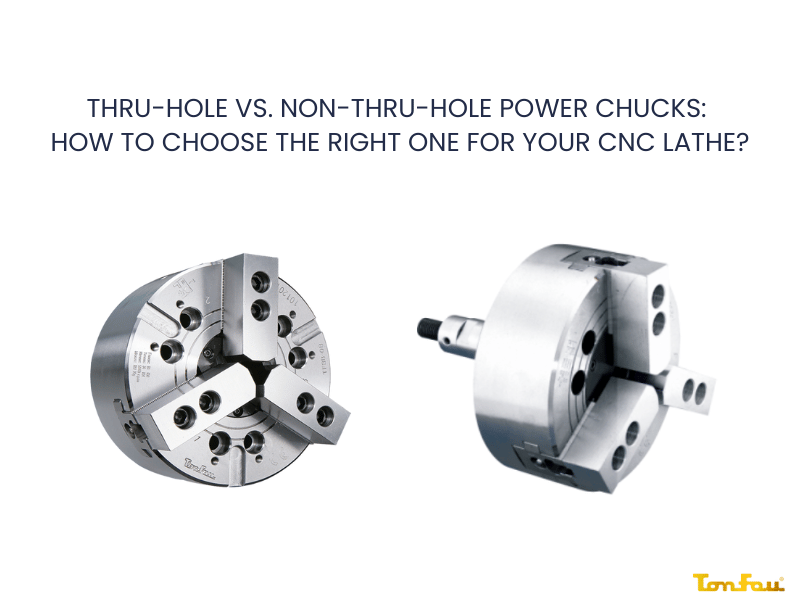
Last month, we discussed how to choose between thru-hole and non-thru-hole power chucks for CNC lathes. This month, we go one step further—addressing a common high-speed machining issue: Is your chuck losing grip at high RPM?
If you’ve experienced part slippage, increased vibration, or inconsistent surface finish at higher spindle speeds, the root cause often lies in physics—specifically, centrifugal force.
The Physics Behind Grip Loss: Centrifugal Force
As spindle speed increases, centrifugal force rises dramatically.
Key concept: Centrifugal force increases with the square of rotational speed.
- Double the RPM → centrifugal force increases four times
- Triple the RPM → centrifugal force increases nine times
At high speeds, this outward force begins to counteract the clamping force generated by your chuck jaws. The result can include:
- Reduced effective gripping force
- Higher vibration
- Increased runout
- Poorer surface finish
- Accelerated tool wear
Even a well-designed power chuck can struggle when the RPM enters high-speed ranges.
Why Traditional Power Chucks Face Limitations at High RPM
Three-jaw and four-jaw wedge type power chucks are excellent for:
- Heavy cutting loads
- Large workpieces
- Flexible diameter ranges
- Strong hydraulic or pneumatic clamping
However, at very high speeds, several structural factors can work against them:
- Limited jaw contact area (point contact instead of full wrap)
- Higher rotating mass
- Greater dynamic imbalance potential
- Reduced effective grip due to outward jaw expansion
This does not mean power chucks are inferior—it simply means that application matching is critical.
Why Collet Chucks Perform Better at High Speeds
Unlike standard jaw chucks, collet chucks provide 360° uniform clamping around the workpiece. This structural difference creates major performance advantages:
1. Full Circumference Contact
The workpiece is evenly supported along its entire outer diameter. This increases friction area and reduces localized pressure points.
2. Better Balance
Collet systems are typically lighter and more symmetrical, improving rotational stability at high RPM.
3. Reduced Runout
Uniform clamping improves concentricity, leading to better surface finish, longer tool life, and more stable cutting forces.
4. Stronger Effective Grip at High RPM
Because clamping pressure is evenly distributed, centrifugal force has less impact on reducing holding power. For precision turning applications, this makes a significant difference.
When Should You Switch to a Collet Chuck?
Consider a collet chuck if:
- You are running high-RPM spindle speeds
- Your parts are small to medium diameter bar stock
- Surface finish and tolerance consistency are critical
- You are operating automated bar feeding systems
- You want to minimize vibration in lightweight materials
Collet systems are especially effective in:
- High-speed aluminum machining
- Precision shafts and pins
- Mass production turning
- Swiss-type CNC applications
How TON FOU Supports High-Speed Precision Machining
At TON FOU, we specialize in high-precision clamping systems for CNC lathes and turning centers. While wedge-type power chucks provide strong and reliable clamping for heavy-duty machining, we also understand that high-RPM applications require a different solution.
For manufacturers targeting higher spindle speeds, improved concentricity, reduced vibration, and stable automated production, collet chuck systems are often the optimal choice. Choosing the correct clamping system—whether power chuck or collet chuck—depends on your machining parameters, cutting forces, and RPM range.
Power Chuck vs Collet Chuck: A Practical Comparison
| Feature | Power Chuck | Collet Chuck |
|---|---|---|
| Heavy Cutting | Excellent | Moderate |
| Diameter Flexibility | High | Specific size range |
| High-RPM Stability | Moderate | Excellent |
| Runout Control | Good | Superior |
| Automation Compatibility | Good | Excellent |
| Surface Finish Quality | Good | Superior at high RPM |
There is no universal best choice—only the right choice for your application.
Final Thoughts
If your chuck is losing grip at high speeds, the issue may not be the chuck quality—it may be the mismatch between clamping design and RPM demands.
Understanding centrifugal force and its effect on clamping systems is essential for modern CNC manufacturers aiming for higher efficiency, better surface finish, stable automation, and reduced scrap rate. High-RPM machining demands precision-engineered clamping solutions.
Ready to Optimize Your High-Speed Machining?
Whether you are evaluating a high-speed collet chuck system or selecting the right power chuck for your CNC lathe, the TON FOU team is ready to assist.
Contact us today to discuss your machining requirements and find the ideal clamping solution for your production line.
Visit: https://www.tonfou.com
Contact Us: https://www.tonfou.com/en-US/contact