
Selecting the right power chuck is one of the most critical decisions in setting up a CNC lathe. It is the direct interface between your machine and your workpiece, determining not only the safety of the operation but also the precision and efficiency of your production line.
At Tonfou, we often get asked: "Should I invest in a thru-hole or a non-thru-hole hydraulic chuck?" The answer depends entirely on your specific machining requirements. In this article, we will break down the technical differences, advantages, and ideal applications for both to help you maximize your equipment’s ROI.
1. Thru-Hole Hydraulic Power Chucks: The King of Versatility
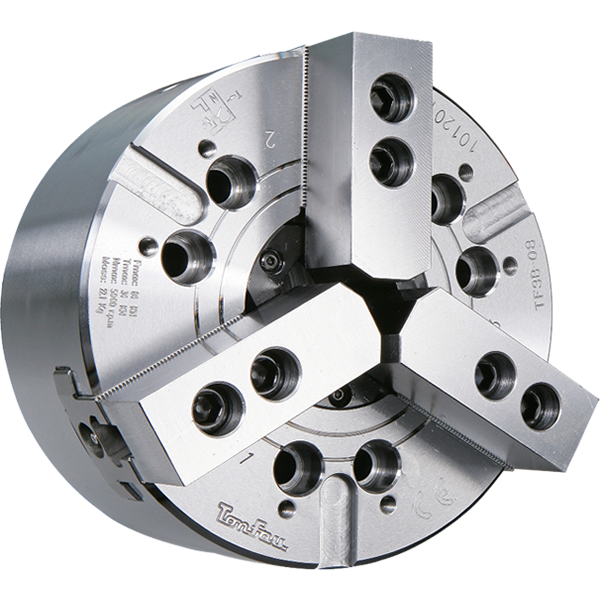
As the name suggests, a thru-hole power chuck features a hollow center that aligns with the spindle bore of your lathe. This design is the industry standard for high-volume, automated production.
Key Advantage: Continuous Bar Feeding
The primary benefit of a thru-hole chuck is that it allows long bar stock to pass through the spindle. When paired with an automatic bar feeder, the machine can run continuously for hours without human intervention.
Ideal Applications:
- Mass production of small-to-medium parts.
- Long shaft machining.
- Automated "lights-out" manufacturing.
Technical Consideration: While versatile, the hollow center means internal components are slightly more exposed to fine chips. Regular lubrication and choosing a high-quality brand like Tonfou with superior sealing is essential.
2. Non-Thru-Hole Hydraulic Power Chucks: Maximum Rigidity and Protection
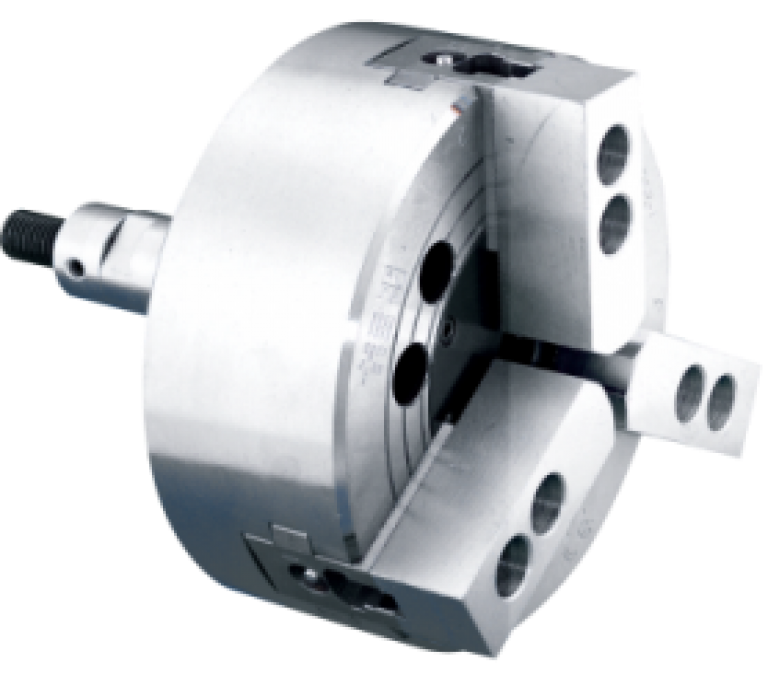
A non-thru-hole power chuck (or solid chuck) has a closed center. While you lose the ability to feed bars through the spindle, you gain several mechanical advantages.
Key Advantage: High Rigidity and Dirt Resistance
Because the chuck is solid, it inherently possesses higher structural rigidity, which is vital for heavy-duty cutting. Furthermore, the closed design prevents cutting chips and coolant from entering the chuck body and the machine spindle, significantly extending the service life of the internal wedge-hook mechanism.
Ideal Applications:
- Short, heavy workpieces or large-diameter castings.
- Vertical CNC lathes where chips fall directly onto the chuck.
- High-torque, heavy-duty roughing operations.
Technical Consideration: These chucks are often more compact and easier to maintain in harsh environments where "dirty" materials like cast iron are being machined.
3. Critical Factors to Consider Before Buying
When choosing between the two, ask your production team these three questions:
- What is the raw material form? If you use long bars, thru-hole is mandatory. If you use pre-cut billets or castings, non-thru-hole offers better protection.
- Is the environment "high-chip"? If you are machining materials that produce a lot of fine dust or chips (like cast iron), the non-thru-hole design provides a superior seal for the spindle.
- Do you need a Collet Chuck transition? If your shop often switches to a collet chuck for high-precision small parts, ensure your hydraulic cylinder is compatible with the drawtube requirements of both systems.