
In modern precision manufacturing, complex workpieces often require more than simple turning or milling. Parts used in automotive, aerospace, machinery, medical devices, electronics, and industrial equipment may involve multiple diameters, drilled holes, milled surfaces, grooves, threads, and tight tolerance requirements. To improve efficiency and reduce repeated setup errors, many manufacturers rely on CNC mill-turn machines or multi-axis turning milling centers to complete multiple machining processes in one setup.
However, the performance of a mill-turn machine does not depend only on the machine itself. Stable workholding is just as important. When the workpiece is not clamped securely, problems such as vibration, runout, dimensional deviation, poor surface finish, and tool wear can occur. This is why power chucks, rotary hydraulic cylinders, and related workholding components play a critical role in complex CNC mill-turn applications.
What Is a CNC Mill-Turn Workpiece?
A CNC mill-turn workpiece refers to a part that requires both turning and milling operations during the machining process. Turning is commonly used to machine round or cylindrical features, while milling is used to create flats, slots, holes, grooves, angled surfaces, and other geometric shapes. In the past, these processes often required multiple machines and repeated clamping. Today, CNC mill-turn machines allow manufacturers to complete many of these operations in a single setup.
This is especially useful for parts with complex shapes or strict tolerance requirements. Examples include shafts, connectors, valve components, hydraulic parts, precision sleeves, medical components, and machinery parts. By reducing the need to move the workpiece between different machines, manufacturers can improve accuracy, shorten production time, and reduce the risk of human error.
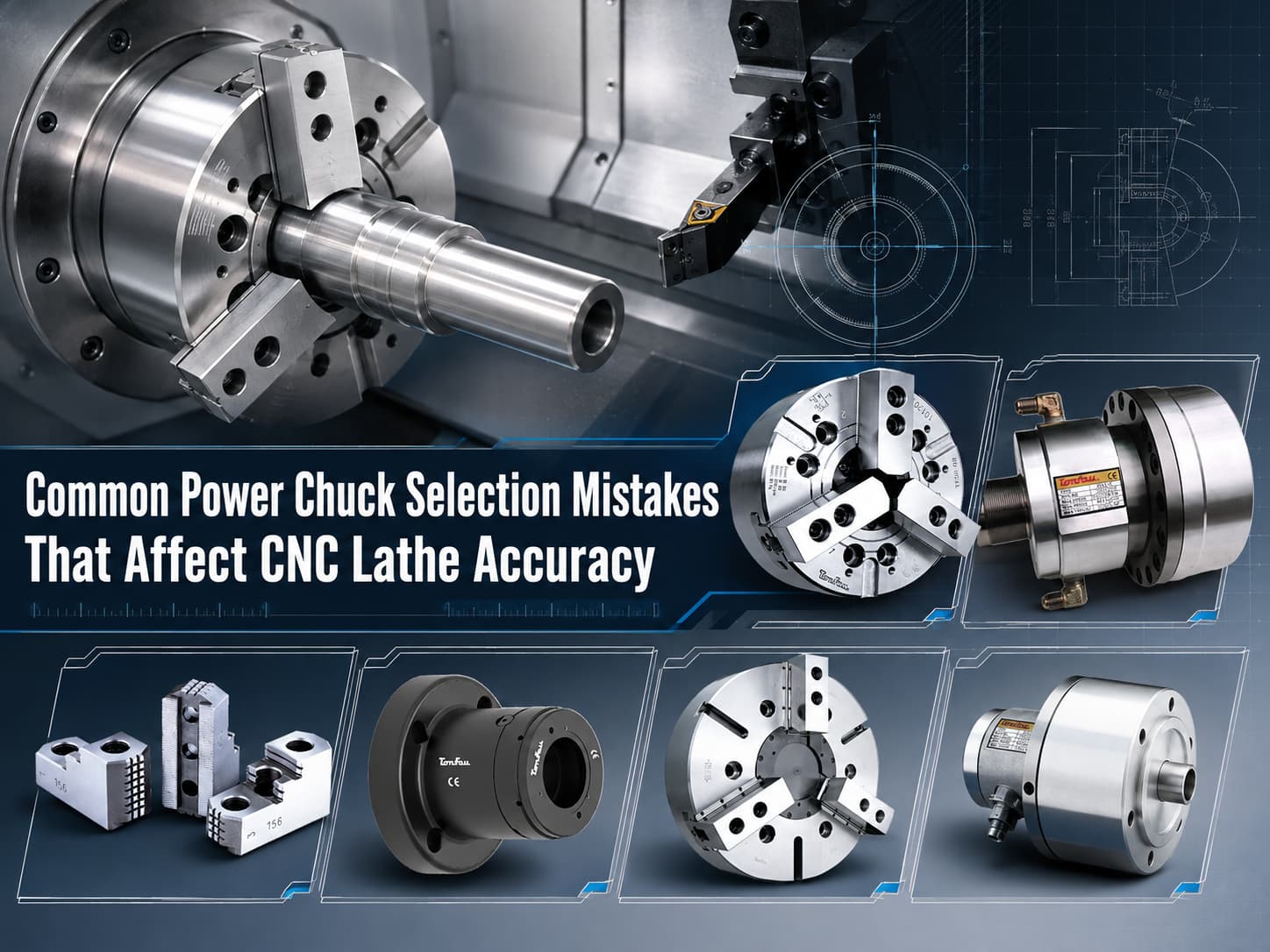
However, because the workpiece may be exposed to different cutting directions and machining forces, the clamping system must be strong, stable, and accurate. A standard clamping solution may not be enough for high-speed or multi-process machining. Depending on the workpiece shape, material, and machining process, manufacturers may need to select suitable through hole power chucks, non through hole power chucks, hydraulic cylinders, jaws, or collet chucks.
Why Workholding Matters in Complex Mill-Turn Machining
CNC mill-turn machines are designed to reduce setup time and improve machining efficiency. But to fully benefit from this equipment, the workpiece must remain stable throughout every operation. A complex part may experience different cutting forces when the machine switches from turning to milling, drilling, or tapping. Each process may apply force from a different direction.
If the workholding system is not rigid enough, the workpiece may vibrate or move slightly during machining. Even a small movement can cause tolerance issues, especially for precision components. In some cases, poor clamping may also reduce tool life, increase scrap rates, or cause machine downtime.
| Common Machining Challenge | Possible Cause | Impact on Production |
|---|---|---|
| Vibration during machining | Insufficient clamping rigidity or unstable workholding | Poor surface finish, shorter tool life, unstable machining quality |
| Runout or eccentricity | Inaccurate clamping or poor workpiece positioning | Dimensional deviation and assembly issues |
| Workpiece movement | Clamping force is too low or not suitable for the cutting load | Scrap parts, rework, and potential safety risks |
| Workpiece deformation | Clamping force is too high for thin-wall or delicate parts | Out-of-tolerance parts and reduced product quality |
| Frequent setup errors | Repeated clamping across multiple machines | Longer production time and lower consistency |
For B2B manufacturers, these issues directly affect production cost and delivery reliability. A stable power chuck and hydraulic cylinder system can help reduce rework, improve machining consistency, and support more predictable production output.
Key Requirements for Power Chucks in Mill-Turn Applications
When selecting a power chuck for complex CNC mill-turn workpieces, manufacturers should not only consider the chuck size. The application, material, machining process, and production volume must also be reviewed.
| Selection Factor | Why It Matters |
|---|---|
| Clamping force | The chuck must hold the workpiece securely during turning, milling, drilling, and tapping. |
| Workpiece shape | Round, irregular, thin-wall, or short workpieces may require different chuck and jaw configurations. |
| Chuck type | Through hole power chucks are suitable for bar feeding, while non through hole power chucks are often used for shorter or special-shaped parts. |
| Repeatability | Stable positioning is important for mass production and consistent machining quality. |
| Rotation speed | The chuck must match the machine speed and machining conditions. |
| Jaw selection | Hard jaws and soft jaws should be selected based on machining stage, material, and surface requirements. |
| Automation compatibility | For bar feeders or automated loading systems, the chuck must support smooth and reliable production flow. |
A suitable power chuck helps balance machining safety and part quality. If the clamping force is too low, the workpiece may shift. If it is too high, thin-wall or delicate parts may deform. For this reason, manufacturers need to consider both rigidity and workpiece protection.
In production environments, the workpiece may be loaded and unloaded hundreds or thousands of times. The chuck must provide consistent positioning and clamping performance to maintain stable machining results. This is especially important for automotive, machinery, medical, and industrial components that require repeatable dimensional accuracy.
The Role of Hydraulic Cylinders in Stable Clamping
While the power chuck directly holds the workpiece, the hydraulic cylinder is responsible for driving the clamping action. This makes the cylinder a key part of the entire workholding system.
A quality rotary hydraulic cylinder should provide smooth movement, stable pressure transmission, and reliable operation during spindle rotation. For long production runs, consistency is especially important. If the cylinder does not perform reliably, the chuck may not clamp with the same force each time, which can affect machining accuracy.
| Hydraulic Cylinder Type | Suitable Application | Main Benefit |
|---|---|---|
| Through hole hydraulic cylinder | Bar stock, tubes, long shafts, continuous production | Allows material to pass through the spindle and supports automated feeding |
| Non through-hole hydraulic cylinder | Shorter workpieces or applications without bar feeding | Suitable for compact machine setups and stable clamping control |
In mill-turn applications, hydraulic cylinders also need to match the chuck and machine spindle requirements. Choosing compatible components helps reduce installation issues and ensures that the workholding system performs as intended.
For applications involving long bars or tubes, through hole hydraulic cylinders offer additional value. They allow material to pass through the spindle, helping manufacturers improve production efficiency and reduce manual handling. This is especially beneficial for shaft parts, fittings, connectors, and other components produced from bar stock.
Common Applications for Power Chucks and Hydraulic Cylinders
Power chucks and hydraulic cylinders are widely used in CNC turning and mill-turn applications across different industries. These components are especially important when workpieces require stable clamping, repeated machining accuracy, and efficient production.
| Industry | Common Workpieces | Why Stable Workholding Matters |
|---|---|---|
| Automotive | Shafts, bushings, connectors, brake components, transmission parts | Supports high-volume production and consistent part quality |
| Machinery manufacturing | Sleeves, flanges, hydraulic components, precision mechanical parts | Helps maintain dimensional accuracy and assembly reliability |
| Medical devices | Small precision parts, sleeves, connectors, special-shaped components | Reduces deformation and supports tight tolerance machining |
| Electronics | Connectors, small metal parts, communication components | Improves repeatability and surface quality for small parts |
| Industrial equipment | Durable machine parts, fittings, structural components | Supports stable machining under heavier cutting conditions |
For bar stock machining or smaller precision components, manufacturers may also consider a collet chuck. Collet chucks are often used when workpieces require stable gripping, high repeatability, and efficient changeover during continuous machining.
How to Choose the Right Workholding Solution
For manufacturers evaluating power chucks and hydraulic cylinders, the selection process should begin with the workpiece and machining requirements. Instead of choosing only by chuck size, it is better to review the complete production condition.
| Question to Consider | Recommended Direction |
|---|---|
| Is the workpiece produced from long bar stock? | Consider through hole power chucks and through hole hydraulic cylinders. |
| Is the workpiece short, heavy, or special-shaped? | Consider non through hole power chucks. |
| Is the surface already finished or easy to damage? | Consider suitable soft jaws. |
| Is the process rough machining or heavy-duty cutting? | Consider suitable hard jaws and sufficient clamping force. |
| Does the process require continuous production? | Choose components that support automation, repeatability, and long-term stability. |
| Does the machine require cutting fluid management? | Consider adding a coolant collector as part of the machining setup. |
The machine type is also important. A CNC lathe, Swiss-type lathe, and multi-axis turning milling center may require different chuck and cylinder configurations. For complex mill-turn workpieces, it is usually better to select a workholding solution that supports both rigidity and flexibility.
Manufacturers should also consider the complete clamping setup, not only the chuck itself. A suitable power chuck, matching hydraulic cylinder, proper jaw selection, and optional accessories can all affect machining stability, efficiency, and long-term operation.
TON FOU Workholding Solutions for CNC Mill-Turn Applications
TON FOU provides multiple workholding components for CNC turning and mill-turn applications. For manufacturers working with complex CNC workpieces, these products can support stable clamping, automated machining, and improved production efficiency.
| TON FOU Product | Product Link | Suitable Use |
|---|---|---|
| Through Hole Power Chuck | View Product | Bar feeding, shaft machining, tube machining, continuous production |
| Non Through Hole Power Chuck | View Product | Short workpieces, special-shaped parts, flange-type components |
| Through Hole Hydraulic Cylinder | View Product | Works with through hole power chucks for bar feeding applications |
| Non Through-Hole Hydraulic Cylinder | View Product | Compact clamping applications without bar feeding |
| Collet Chuck | View Product | Small parts, bar stock, high repeatability machining |
| Hard Jaws & Soft Jaws | View Product | Workpiece gripping, rough machining, precision clamping |
| Coolant Collector | View Product | Cutting fluid collection and machining environment management |
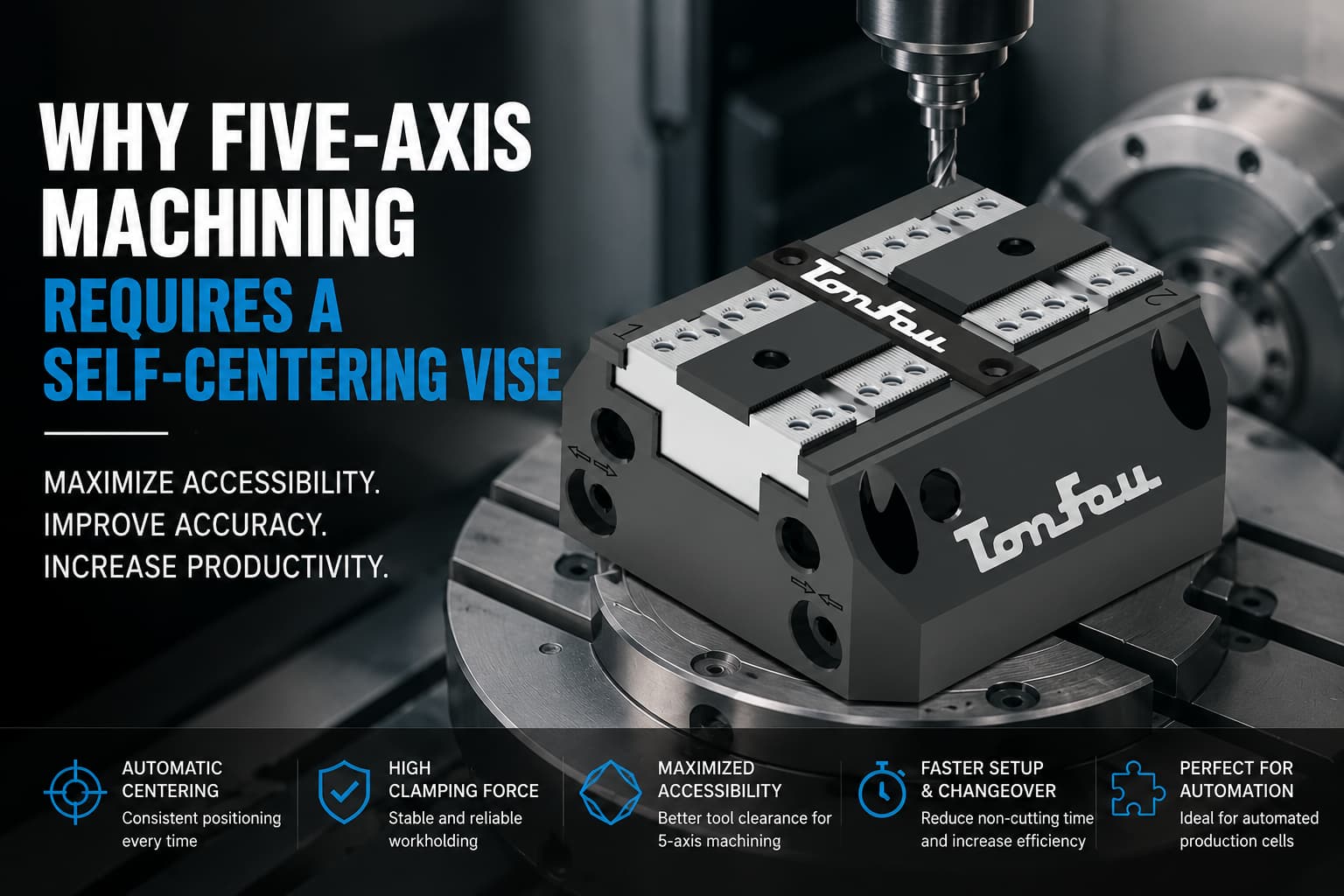
| Automatic Centering Power Vise | View Product | Stable positioning for demanding CNC machining environments |
Through-hole power chucks and hydraulic cylinders are suitable for bar feeding and continuous production, while non through-hole power chucks can be applied to shorter or special-shaped workpieces. With different chuck types and jaw options available, manufacturers can choose a solution based on their workpiece size, machining process, and production needs.
For CNC mill-turn machining, the right workholding system helps maximize the value of the machine. It allows manufacturers to reduce repeated clamping, improve dimensional consistency, and complete more processes in one setup.
Conclusion
CNC mill-turn machines are valuable because they combine multiple machining processes and reduce setup time. But their performance depends heavily on stable and accurate workholding. Power chucks and rotary hydraulic cylinders are essential components that help secure the workpiece, maintain clamping consistency, and support efficient machining of complex parts.
For manufacturers producing shafts, connectors, hydraulic parts, precision machinery components, medical parts, or other complex CNC workpieces, choosing the right power chuck and hydraulic cylinder is not only a tooling decision. It is a production quality decision.
By selecting a reliable workholding system, manufacturers can improve machining stability, reduce errors, and achieve more consistent results in demanding CNC mill-turn applications. For companies looking for suitable power chucks, hydraulic cylinders, or related clamping components, TON FOU provides workholding solutions designed to support precision machining and long-term production needs.
Looking for Reliable Workholding Components for CNC Mill-Turn Applications?
Choosing the right power chuck, hydraulic cylinder, and clamping components can make a significant difference in machining stability, production efficiency, and long-term part quality. If your production involves complex CNC mill-turn workpieces, bar feeding, precision components, or automated machining processes, TON FOU can help you select suitable workholding solutions based on your machine type and workpiece requirements.
Contact TON FOU to discuss the right power chucks, rotary hydraulic cylinders, collet chucks, jaws, and related clamping components for your CNC machining applications.
Contact TON FOU